Parenting
PARTNERING FOR SUCCESS: HOW PARENTS CAN PLAY AN ACTIVE ROLE IN THEIR CHILDREN'S LEARNING
Being involved does not require being an expert in every subject. It simply means showing interest, offering encouragement, listening, reading together and creating opportunities for learning everyday.
By Jeremiah Rose
•
August 20, 2026
•
6 min read
A child's education does not begin when the school bell rings, and it does not end when the school day is over.
Long before a child writes their first examination, reads their first textbook, or solves their first mathematics problem, learning has already begun at home. Parents are a child's first teachers, while schools provide the structure, expertise, and environment that help that learning grow.
When parents and schools work together, something powerful happens. Children feel supported, valued, and confident. They begin to understand that education is not simply a school responsibility; it is a shared journey.
Imagine a child who struggles with reading. A teacher may identify the challenge and provide support in the classroom. But when that same child returns home to a parent who reads with them, listens patiently, celebrates small improvements, and encourages them not to give up, the child receives a powerful message: "I can do this, and I am not alone."
That is the power of partnership.
WHY PARENTAL INVOLVEMENT MATTERS
Children are more likely to take learning seriously when they see that the adults around them value education.
Parental involvement does not mean sitting beside a child throughout every homework session or knowing the answer to every question. Sometimes, it is as simple as asking, "What did you learn today?" or celebrating a child's effort after a difficult assignment.
These small moments can shape a child's attitude towards learning.
When parents take an active interest in their children's education, they can help children:
• Develop stronger academic and communication skills.
•Build confidence and motivation.
• Develop better study habits.
• Improve their attendance and punctuality.
• Become more responsible and self-disciplined.
• Develop problem-solving and critical-thinking skills.
•Build a positive attitude towards learning.
7 SIMPLE WAYS PARENTS CAN SUPPORT LEARNING AT HOME
1. READ TOGETHER, EVERY DAY
A book can take a child places that a classroom sometimes cannot.
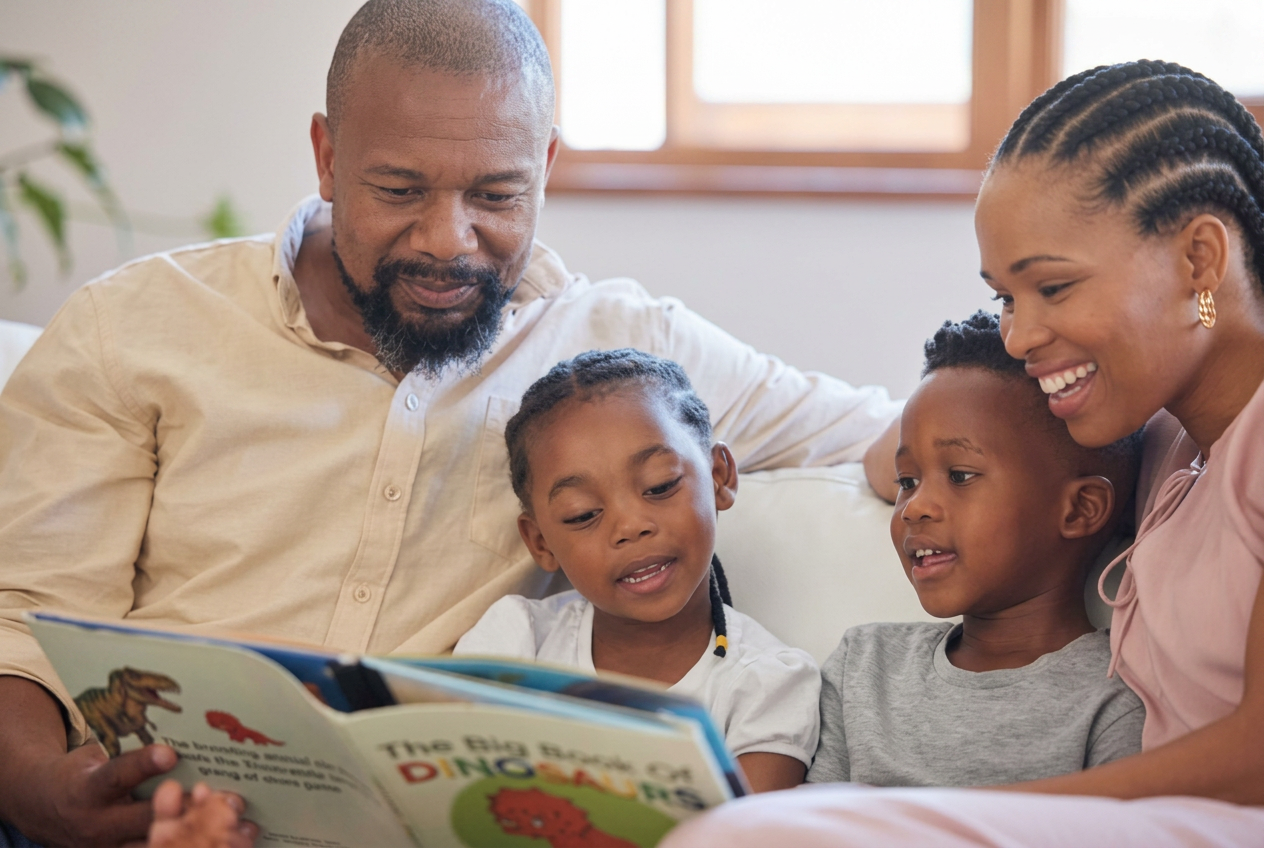
Set aside time each day to read with your child. Younger children can listen to stories and ask questions, while older children can read aloud, explain what they have learned, and discuss the characters or ideas in a book.
For example, after reading a story, do not simply ask, "Did you enjoy it?"
Ask:
"What would you have done differently if you were the main character?"
That simple question can turn reading into a lesson in communication, reasoning, and decision-making.
2. CREATE A CONSISTENT LEARNING ROUTINE
Children benefit from structure.
A regular time for homework, revision, reading, or other learning activities can help children become more organised and responsible.
It does not have to be complicated. A simple routine such as:
Homework → Reading → Revision → Relaxation
can help a child understand that learning is part of everyday life.
3. ASK BETTER QUESTIONS ABOUT SCHOOL
Instead of asking only, "How was school today?", which often produces the famous answer, "Fine," try asking questions that encourage conversation.
You could ask:
•What was the most interesting thing you learned today?
•What made you laugh today?
• Was anything difficult?
•What problem did you solve?
• Did you help anyone today?
•Is there anything you would like me to help you understand?
These questions give parents a window into their child's academic and emotional experience.
4. CREATE A POSITIVE LEARNING ENVIRONMENT
Children do not always need an expensive study room. What they need is a suitable environment.
A quiet corner, a comfortable chair, adequate lighting, and basic learning materials can make a difference.
Where possible, reduce distractions during study time. Put away unnecessary devices, lower the noise, and give the child an opportunity to concentrate.
A small, consistent learning space can communicate a big message:
"Your education matters."
5. TURN EVERYDAY ACTIVITIES INTO LEARNING OPPORTUNITIES
Learning is everywhere.
Cooking can teach measurement and fractions. Shopping can introduce budgeting and mental mathematics. Gardening can spark curiosity about plants and science. Reading a newspaper can encourage vocabulary development and critical thinking.
Even a simple journey can become a learning experience.
For example, while travelling, a parent might ask:
"How many different road signs can you identify?"
A simple conversation has suddenly become a lesson in observation and communication.
6. CELEBRATE EFFORT, NOT ONLY RESULTS
A child's report card should not be the only measure of progress.
When a child works hard, improves, asks questions, tries again after failing, or completes a difficult task, those efforts deserve recognition.
Instead of saying only:
"You got 80 percent. Well done."
Parents can also say:
"I noticed how hard you worked to improve your score. I am proud of your effort."
This teaches children that progress matters and that mistakes are not the end of learning.
7. BUILD A STRONG RELATIONSHIP WITH TEACHERS
Parents and teachers should not meet only when there is a problem.
Regular communication helps parents understand their child's strengths, areas for improvement, behaviour, interests, and progress.
A teacher may notice something at school that a parent has not noticed at home. Likewise, a parent may understand something about the child that can help the teacher provide better support.
When both sides communicate openly, the child benefits.
THE BENEFITS GO BEYOND THE CLASSROOM
Active parental involvement does not benefit only the child. It strengthens the entire school community.
FOR THE CHILD
Children can develop:
• Greater confidence and self-esteem.
• Better academic performance.
•Stronger social and emotional skills.
• Better study habits.
• Greater motivation to learn.
• A stronger sense of responsibility.
FOR PARENTS
Parents gain:
• A better understanding of their child's strengths and needs.
• Stronger relationships with their children.
• Greater confidence in supporting learning at home.
• Better communication with teachers and the school.
FOR SCHOOLS
Schools benefit from:
•Stronger relationships with families.
• Better communication between home and school.
•A more supportive learning environment.
• Greater collaboration around children's development.
YOU DO NOT HAVE TO BE AN EDUCATION EXPERT
One of the biggest misconceptions about parental involvement is that parents must be experts in every subject.
They do not.
You do not need to know every mathematical formula. You do not need to understand every grammar rule. You do not need to have all the answers.
Sometimes, the most powerful thing a parent can say is:
"I do not know the answer, but let us find out together."
That statement teaches a valuable lesson: learning does not stop when we become adults.
EVERY SMALL ACTION COUNTS
Parental involvement is not always about doing something big.
It can be reading a bedtime story.
It can be checking a child's homework.
It can be listening when they talk about their day.
It can be attending a school event.
It can be asking about a difficult subject.
It can be celebrating improvement.
It can be encouraging a child after failure.
These moments may appear small, but repeated consistently, they can have a lasting impact on a child's confidence, character, and attitude towards learning.
EDUCATION IS A SHARED RESPONSIBILITY
A child's success should never be the responsibility of the school alone.
Teachers bring professional knowledge, guidance, and experience. Parents bring love, familiarity, encouragement, and daily support. When these strengths come together, children receive a stronger foundation for growth.
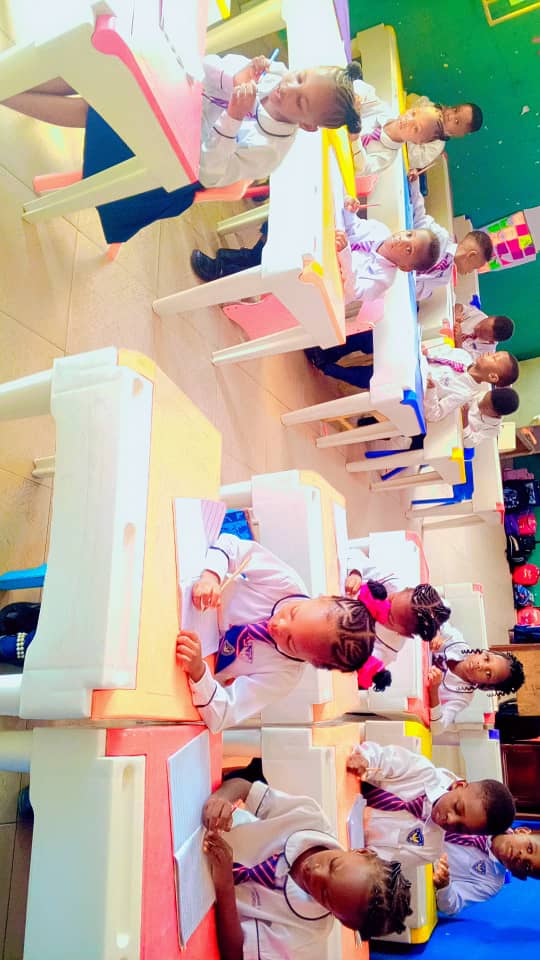
At our school, we believe that education works best when parents, teachers, and pupils work as partners.
Because when parents are involved, teachers are supported.
When teachers and parents collaborate, children are empowered.
And when children are empowered, they are better prepared not only to succeed in school, but also to thrive in life.
Together, let us inspire a lifelong love for learning, one child, one family, and one meaningful step at a time.
Photo Gallery