
Education
The Most Dangerous Pollution
What if the deadliest pollution on earth is not smoke-filled skies or rivers stained with waste, but something far more invisible, something that quietly rewires the mind while no one is paying attention? What is the most dangerous pollution? You will discover the answer in this piece. Read on.
By ADETORO SUNDAY ADEOLA
•
June 2, 2026
•
5 min read
Not all pollution darkens the sky.
Not all pollution contaminates rivers.
Some of the most dangerous pollution is invisible. It does not rise from factories or spill into oceans. It seeps silently and imperceptibly into human consciousness, settling into thought patterns and quietly reshaping how young people interpret themselves, their future, and the world they are stepping into.
It is mental pollution, and its impact is often more deeply rooted than anything physical.
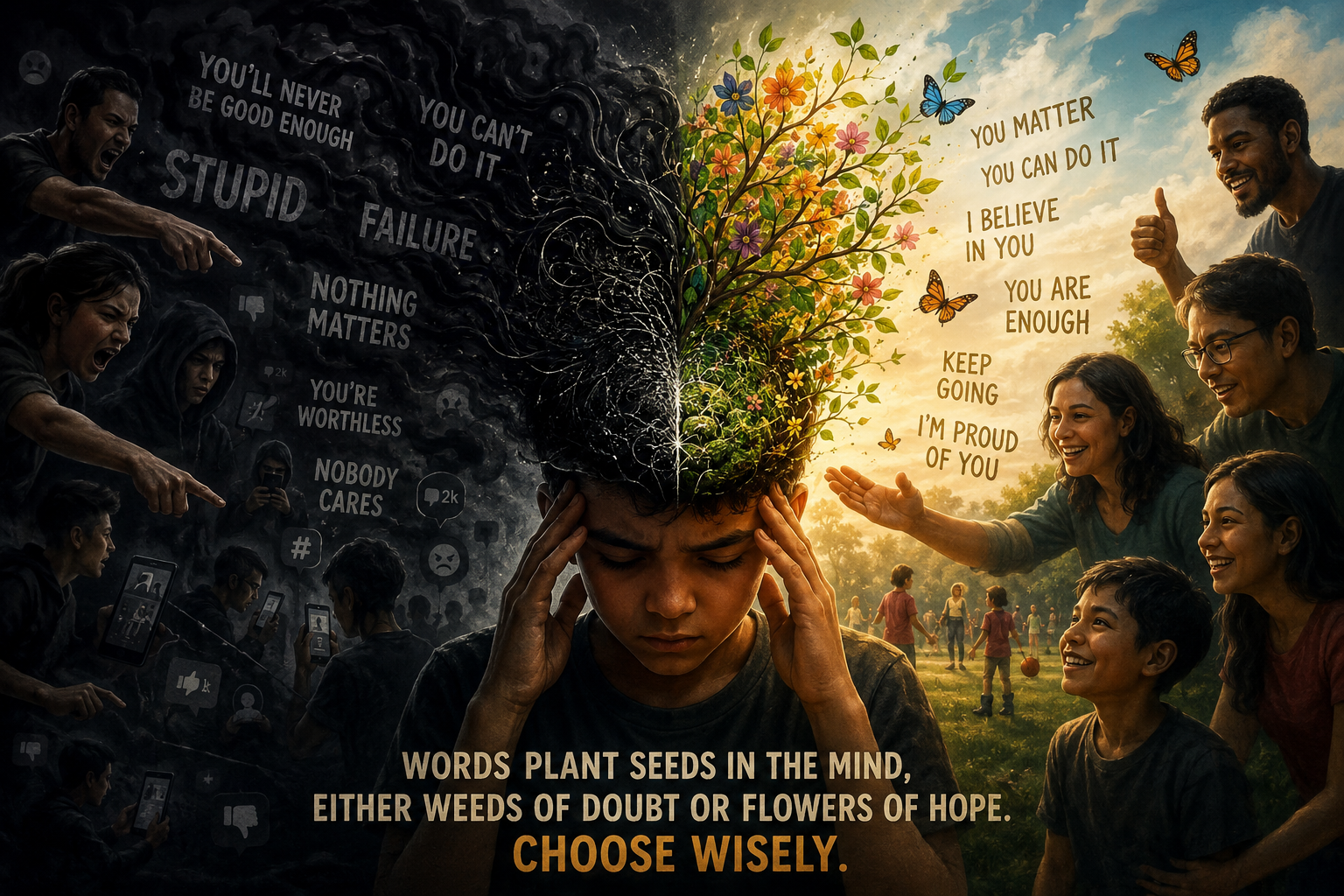
Imagine a farmer standing before fertile land. Instead of planting seeds capable of producing harvest, he scatters weeds across the soil. Time passes, and the field produces exactly what was sown.
The human mind operates the same way. Every word spoken, every narrative repeated, and every belief circulated is a seed. What grows depends entirely on what was planted.
Many of us, including parents and teachers, contribute to this silent damage through careless language. Words like “you are so dull,” “you will never succeed,” or “people like you do not go far” do not disappear after they are spoken. They sink. They settle. They echo.
Over time, they become inner voices.
And once a voice becomes internal, it no longer needs its speaker. It begins to repeat itself in silence, especially in moments that demand courage.
A child begins to answer questions in class with fear already speaking before their mouth opens. A teenager begins to abandon ideas before testing them, not because they failed, but because they have already been conditioned to expect failure.
This is where the damage becomes more complex. Mental pollution does not only insult identity; it predicts outcomes, then quietly trains the mind to obey those predictions.
There is also the subtle violence of comparison. “Your mate is doing better.” “Why are you not like others?” These statements may sound harmless in conversation, but psychologically, they create a distorted mirror where a young person can only see themselves as behind, lacking, or insufficient. Over time, they stop measuring progress by growth and start measuring it by inadequacy.
Even silence can become part of the pollution. The absence of encouragement, the refusal to acknowledge effort, and the constant overlooking of small improvements all quietly communicate a dangerous message: “You are not enough to be noticed.”
But this responsibility does not belong to parents and teachers alone. It is not limited to them; it belongs to everyone.
Friends contribute to it when they mock instead of support.
Siblings contribute to it when they label instead of listen.
Partners contribute to it when they break down confidence instead of building it.
Employers contribute to it when they crush potential with harshness instead of guidance.
Even strangers contribute to it in passing comments, jokes, and online remarks that feel small but land heavily on already fragile minds.
We live in an age where words travel faster than wisdom. A careless comment online can reach thousands. A sarcastic joke can become someone else’s lifelong insecurity. A single message can either stabilize or destabilize a person’s entire self-image.
This is why mental pollution has become a collective responsibility.
But here is where hope remains intact.
Human beings are not only shaped by damage; they are also shaped by reinforcement. One voice of encouragement can interrupt years of criticism. One consistent presence of belief can begin to rebuild what was once reduced. One environment of respect can slowly replace an internal environment of fear.
The mind can be rewritten, but it requires intention from everyone, not just authority figures.
We must learn to speak with awareness, not impulse; to correct without humiliating, to advise without diminishing, to disagree without destroying, to joke without wounding, and to express frustration without planting identity level doubt.
Because words are never just words. They are architecture. They build or they break. They lift or they lower. They shape how someone sees themselves when no one is around to defend them.
In the end, the most dangerous pollution is not the one that stains rivers or clouds the sky, but the one that quietly rewrites a human mind until it forgets its own strength.
It begins softly, almost unnoticeably, in homes, schools, workplaces, conversations, and digital spaces. It hides inside tone, repetition, sarcasm, neglect, and comparison. It survives because it is often unchallenged, even when it is harmful. But its danger is not its permanence; it is its influence on identity.
Because once a person begins to believe the limited version of themselves that was spoken over them, they start living inside a smaller version of life, not because that is all they are capable of, but because that is all they have been repeatedly told they are.
Yet the same force that damages can also restore. Words can be rewritten, environments can be reshaped, voices can be changed, and minds, even those deeply affected, can learn again how to expand, how to believe, how to try, and how to rise.
So the real measure of a society is not only in what it builds physically, but in what it builds mentally inside its people.
Because long after the words are spoken and the moments have passed, what remains is not the noise itself, but what that noise turned someone into.
A single careless word can plant a forest of doubt, but a single wise word can replace it with a garden of hope.
I hope you stop polluting their minds with your words and actions.
Discover more inspiring articles and educational insights on the Cambridge International School Blog.